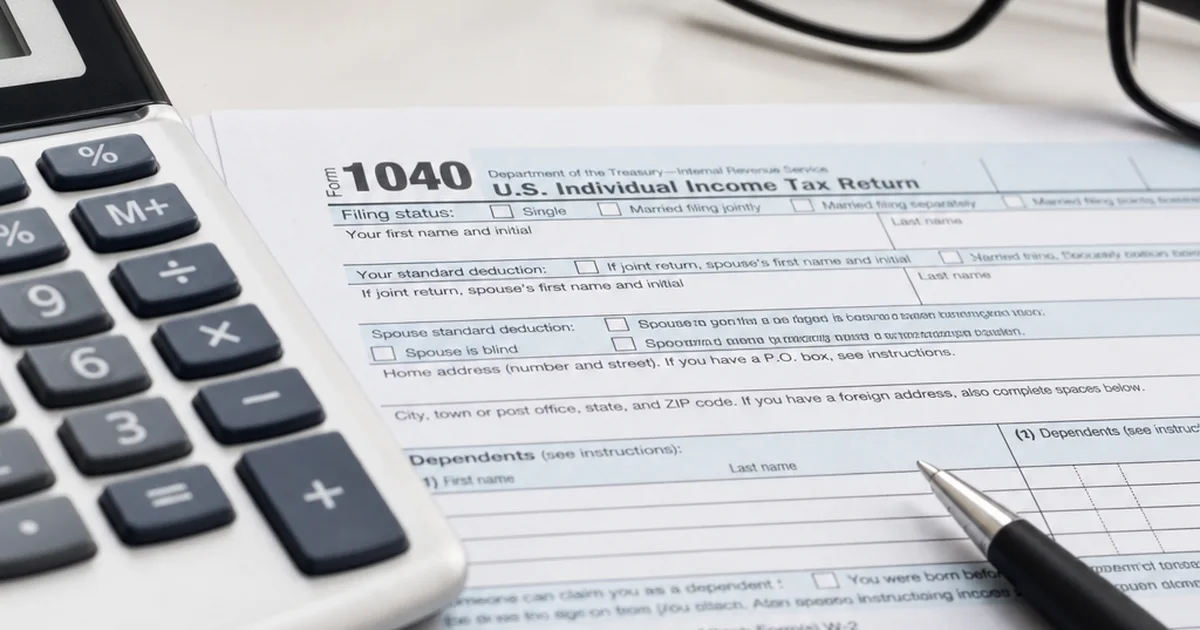
The W-4 form tells your employer how much federal tax to withhold from your paycheck. Getting it right avoids both a big surprise bill at tax time and an oversized refund that means you lent the government money for free.
At the center of it is a straightforward fact: the W-4 determines federal income tax withholding from each paycheck.
The IRS redesigned the W-4 to be more accurate, replacing the old allowance system with direct questions. The rest of this report walks through what it means in plain terms.
This report lays out the essentials in order: the background that explains why the rule looks the way it does, the specific details that determine how it applies, who stands to gain or lose, and the concrete steps to take before you file. The goal is a clear, accurate picture you can act on — not a wall of jargon.
Background: How We Got Here
The IRS redesigned the W-4 to be more accurate, replacing the old allowance system with direct questions. Major life changes — marriage, a new child, a second job — are the usual triggers to update it.
To understand why this matters, it helps to step back from the day-to-day mechanics of filing. The U.S. tax system is built on a mix of statute passed by Congress, regulations issued by the Treasury Department, and administrative guidance from the IRS. A change in any one of those layers ripples through the others, which is why a seemingly narrow adjustment can reshape decisions for millions of filers.
History explains the shape of the rule; the details decide its effect. The next section lays out exactly what the current provisions say, in plain terms, so the practical consequences are easy to see.
By the Numbers
Beyond the headline, a handful of specifics shape how this plays out for real taxpayers:
- The current form asks about dependents, multiple jobs, and other income rather than 'allowances.'
- Too little withholding can lead to a balance due and possible penalties; too much leads to a large refund.
- The IRS offers a free online Tax Withholding Estimator to fine-tune your W-4.
The current form asks about dependents, multiple jobs, and other income rather than 'allowances.' Filers who plan around this detail tend to fare noticeably better than those who ignore it.
Too little withholding can lead to a balance due and possible penalties; too much leads to a large refund. That figure is not arbitrary; it reflects the way the provision is written and the policy goals behind it.
The IRS offers a free online Tax Withholding Estimator to fine-tune your W-4. For most filers, this is the detail that determines whether the change is worth acting on now or simply noting for next year.
Read as a whole, the specifics tell a consistent story. The provision is less about any single number and more about the choices it creates — when to act, what to document, and which option fits your situation. Understanding that framing is more durable than memorizing any one figure that may change next year.
Beyond the Headline
There is a reason careful filers pay attention to developments like this one rather than waiting for a reminder.
The IRS redesigned the W-4 to be more accurate, replacing the old allowance system with direct questions. Major life changes — marriage, a new child, a second job — are the usual triggers to update it. For readers, the takeaway is not to memorize every figure but to recognize the pattern: the rules that govern this area reward attention and punish neglect, often quietly and often long after the decision that caused the problem.
The stakes are higher than the numbers alone suggest because tax decisions compound. A choice made this year can shape refunds, penalties, and options for years afterward. That long tail is exactly why it pays to understand the reasoning now rather than reacting later.
For policymakers and practitioners alike, developments in this corner of the code are watched closely because they signal where the system is heading. For ordinary filers, the practical lesson is simpler: understanding the direction of travel makes it far easier to plan with confidence instead of scrambling at the deadline.
How It Hits Your Return
The consequences show up in different ways for different people. These are the ones that tend to matter most.
- Correct withholding smooths your cash flow across the year.
- A giant refund isn't a bonus; it's your own money returned without interest.
- Under-withholding can trigger an underpayment penalty.
Correct withholding smooths your cash flow across the year. In dollar terms, the size of that effect depends on income, filing status, and the other items on a return, which is why two households facing the same rule can see very different results.
A giant refund isn't a bonus; it's your own money returned without interest. It is the kind of second-order effect that is easy to miss when you focus only on the headline number, yet it often ends up mattering just as much at filing time.
How it looks in practice
Take a household with a couple of income sources and some deductions. Here the change interacts with other parts of the return, so it is worth checking how the pieces fit together before filing rather than after.
What these examples share is that the rule itself does not change your obligations so much as it changes the smart sequence of steps. Getting that sequence right is where most of the benefit lives.
Misreadings That Cost Money
A few persistent misunderstandings surround this topic, and clearing them up saves real money and stress.
What is a W-4 form?
It's the form you give your employer to set how much federal tax is withheld from your paychecks. Getting it right avoids a surprise bill or an oversized refund.
Why is my refund so big?
A large refund usually means you had too much withheld. Adjusting your W-4 can put that money in your paychecks instead of waiting for a refund.
Turning This Into Action
The right response is usually straightforward. Work through these steps in order:
- Use the IRS Withholding Estimator after any major life or income change.
- Update your W-4 with your employer when your situation changes.
- Aim to owe or be owed only a small amount at filing.
This is general information, not personalized advice; for anything unusual about getting w, check with a tax professional or the IRS directly.
The practical bottom line on getting w: none of this requires expertise, only attention. Filers who read the details, check their own numbers, and act in the right order rarely run into trouble. The ones who struggle are almost always those who assumed the rule did not apply to them — exactly the assumption this guide is meant to head off.
The Outlook
Tax rules around getting w are rarely settled for long. Congress revisits major provisions, the IRS updates guidance, and inflation adjustments reset key figures every year. A decision that is optimal today may need revisiting next filing season, which is why a quick annual review matters more than any single choice.
On getting w, the smartest posture is informed patience: understand the current rules, keep your records clean, and revisit your plan when the official numbers for the next year are released. That steady approach consistently beats reacting to every rumor and forecast.
What matters most
- The W-4 determines federal income tax withholding from each paycheck.
- Correct withholding smooths your cash flow across the year.
- The IRS offers a free online Tax Withholding Estimator to fine-tune your W-4.
- Under-withholding can trigger an underpayment penalty.
- Use the IRS Withholding Estimator after any major life or income change.
Taxpayer questions
What is a W-4 form?
Why is my refund so big?
How do I adjust my withholding?
References
This article draws on official, primary sources. Figures and rules change — always confirm current amounts and deadlines with the IRS or a qualified professional.